Privacy Groups Propose Do-Not-Track List - Advertising Age - Digital
Here's an idea, an online do-not-call registry. Privacy groups going head-to-head with online marketers. Bet I know who will win.
Wednesday, 31 October 2007
Privacy Groups Propose Do-Not-Track List - Advertising Age - Digital


Monday, 29 October 2007
One of the proudest days of my life

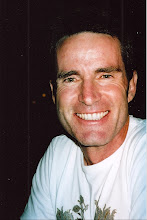
This photo was taken on March 6, 2005 after John Harmsen, myself, and Russell Noye completed a bike ride from Kalgoorlie to Perth - that's 600 kilometres - in 19 hours, 6 minutes. We averaged 32.8 kph. Russ and John are just as tough as old boots.
Sunday, 28 October 2007
Official Google Blog: Google search privacy: Plain and simple
Official Google Blog: Google search privacy: Plain and simple
Search queries saved in logs: Misspelled search terms, prompts for "did you mean".
IP address: Search results returned to the correct computer. Can tell which provider and general location.
Cookies: Small file stored on computer. Reminds of preferences from last time. Search results per pages and language preference
Log of visit: Receipt of visit. Search term, IP address, cookie ID, browser version, operating system, date and time of search.
Some parts of IP address and cookie will be deleted after 18 months.
Thursday, 25 October 2007
Change of State: Information, Policy, and Power: Chapter 9
Change of State: Information, Policy, and Power: Chapter 9: "Information, Policy, and Power in the Informational State Introduction"
War in the age of digital machines: Manuel de Landa
De Landa proposes the concept of the Panspectron (p. 206). Whilst referring to Bentham's Panopticon, which is he points out, a powerful tool for political and societal control through the perception of continuous surveillance, he suggest the Panspectron gathers all the available information about all subjects all of the time. Through a systems of filters and key word matching matters of interest are identified and this results in the subject being brought into focus.
Put this in a modern context and we have the system of robots (bots) employed by search engines that continually search the internet, reporting their findings of information and information linkages back to central points. Data is then analysed through a system of algorithms, such as Google's Page Rank system and this results in the searches we use today. It's only when someone searches (employees the Panspectron's keywords and filters) does the relevant data appear.
Google Public Policy Blog: Data retention: the right balance between privacy and security
A quick post to a piece on the Google Public Policy blog from Peter Fleischer about Google and the EU policy on data retention. Will probably be worth coming back to this one.
Google Public Policy Blog: Data retention: the right balance between privacy and security:
"Citizens should have a right to privacy online. And governments have an obligation to keep their citizens safe. Finding the right balance between privacy and security is a delicate balancing act. Europe’s recent experience with data retention holds interesting lessons for everyone concerned with this balance."
Subscribe to:
Posts (Atom)


 Posts